Coffee Processes
Written By Kevin Whalen
4/03/2026
Some experts will have varying definitions of what exactly these processes mean, but this is directionally accurate from what I’ve seen in the industry (I’m not an expert, more of a coffee nerd).
The basic processes are Washed and Natural, and then there are many variations on those plus many other process methods that are new, niche, or experimental. I added Coconut washed and Honey (natural pulp) here, but there are many others and many variations.
● Washed (also called “wet” - the most common, if the label doesn’t say the process method, it’s probably washed):
1. coffee cherries have the fruit pulp and skin removed
2. the seeds (beans) are washed/fermented in water to remove the sticky sugars (called fruity mucilage)
3. the beans are then washed in water and dried*.
a. usually dried on raised racks with screens to circulate the air, sometimes the beans dry in the sun, which some insist is the best drying method. I saw an example of that when
I toured a family farm in Colombia (Cafe de la Cima, a lovely and generous family southeast of Medellin). They dried the beans on raised racks in the sun, but they designed their racks like drawers, so the racks could quickly be tucked under a shelter in the event of rain.
b. Often sun-drying is not practical because of frequent rains, so you’ll see sheds or makeshift drying sheds with plastic sheeting but good ventilation so that the rain doesn’t get to the drying coffee beans.
c. For large-scale operations, commercial drying units are often used (frowned upon in the Third Wave coffee world because it may have some effect on the flavor).
Coconut washed is fairly new, some would say experimental. It generally means that it’s the same wash process as above except for Step 2, instead of soaking/fermenting in water, the beans are soaked/fermented in something coconut-related (coconut water or coconut milk, for example, or even held in a coconut infusion tank similar to the process of infused liquors). The result is something with coconut tones, maybe something “tropical” but also fruity or sweet.
● Natural process:
1. the entire cherry is dried (preferably in the sun) without removing the skin or fruity pulp. This works to infuse that fruity pulp into the bean.
2. After the whole cherry is dried (they will look sort of like raisins), they go through a mechanical hulling process to extract the beans.
3. The beans may be cleaned by a dry method (like with a blower) to remove remaining mucilage, seed shell (papery material called parchment), dust and debris, but they are not washed in water since the beans are already dry (adding moisture could affect quality and would also require re-drying). The finished beans will look like washed green beans except maybe a bit rougher or less refined than the washed green.
Natural process usually produces a fruitier coffee, often with wine flavor tones. The brewed coffee tends to have a heavier body as well.
● Honey process (natural pulp) Farmer to Farmer had a honey processed coffee some years ago, so some customers may already be familiar with this process. It doesn’t use actual honey.
1. The skin is removed but not the fruity mucilage (the skin/pulp process will remove some of the pulp but there’s still a layer of fruity/sugary mucilage).
2. The beans are dried with that fruity layer intact and won’t look like typical green beans yet because there is still dried mucilage, parchment, dust, and other debris on them.
3. Next, the beans are hulled to scrape off the remaining mucilage and parchment.
4. Then the beans are dry cleaned similar to the natural process (no moisture)
Honey process is considered more in the middle between washed and natural - fruity but not as fruity as natural, heavier than washed but not as heavy as natural. The beans will look a bit more weathered than washed green but not as much as natural.
Beans that are run through the honey process will also have a fruitier flavor than typical washed beans, but it won’t be as fruity as natural process. It may be a bit of a heavier feel than washed, but again, not as much as natural.
At the moment, the industry does not have a single definitive source for coffee processes. The Specialty Coffee Association (SCA) defines many very detailed industry standards that include a rigorous drafting and approval process. However, for coffee process standards, the SCA’s standard (SCA - 120 Coffee Processing - Green Coffee Identity Standard) is still in development. Processes are discussed in some of the other standards, so I included some of the general information here.
Some countries have regulations on what process can be labeled on exports, and these are generally consistent with what I have above. Some country standards may provide greater detail for a particular type of processing. For example, Colombia’s coffee industry is heavily identified with washed coffee, while Costa Rica’s honey process is well-defined. Brazil has pulp-natural, which is basically honey process with some differences in terminology or execution.
* Proper drying is a huge deal for coffee exports. If the beans aren’t properly dried (at 10-12% moisture according to the SCA, never more than 12.5%), there is a risk the bean quality will be unstable, difficult to roast, get molds and mycotoxins, and even create health risks because some of those toxins can survive the roasting process. That’s why coffee imports are usually tested right away for moisture content and water activity (while I’ve seen the equipment used for this, I haven’t delved much further than that - there’s a limit to my coffee nerdom).
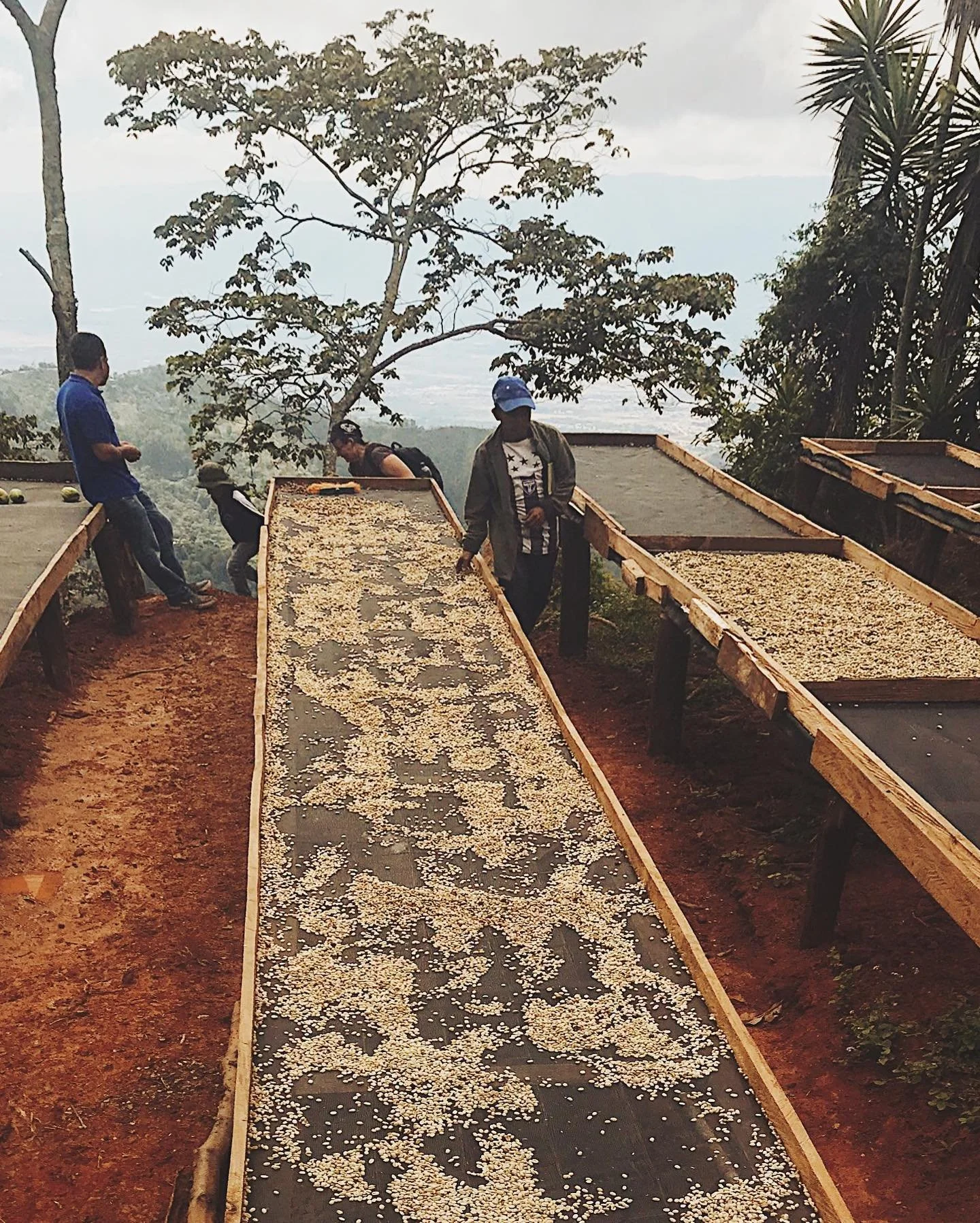
This is Maximo, a partner coffee farmer with Farmer To Farmer. Drying his green coffee bean crop.